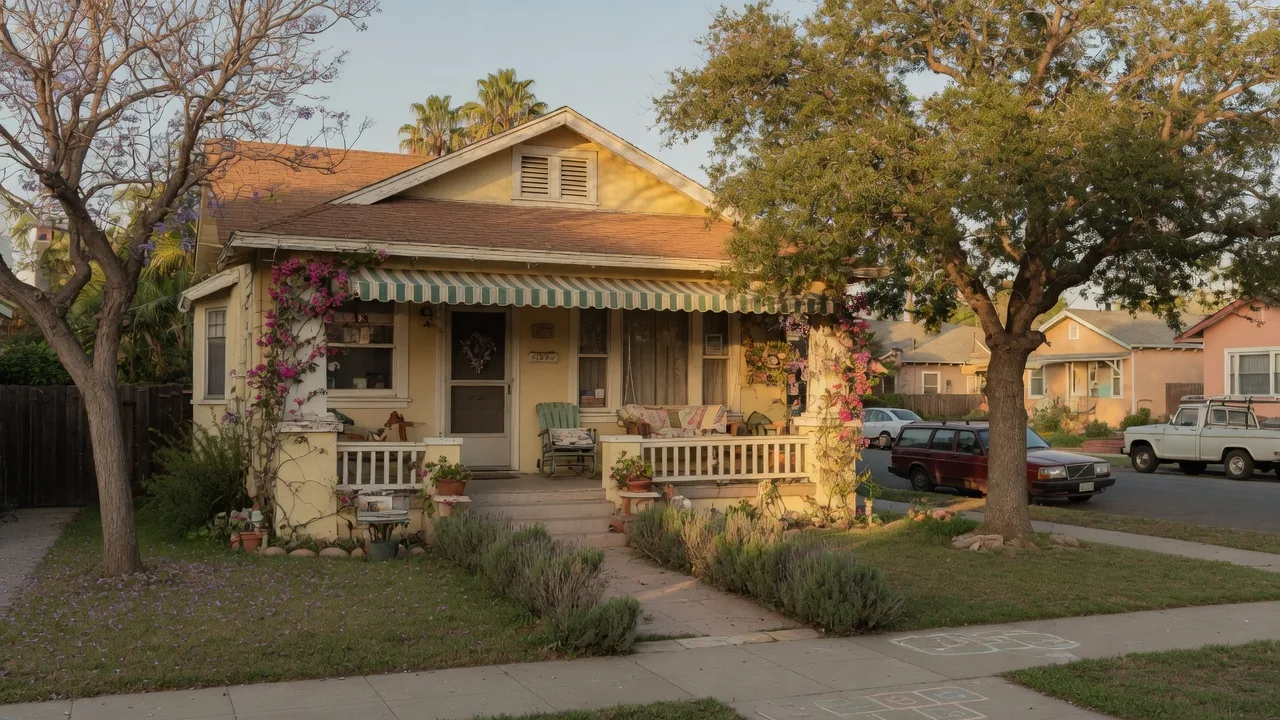
Here is the short answer, so you can stop wondering: yes, an heir can live in the inherited home during probate, but only with the executor's permission, and usually not for free. During probate, the family home no longer belongs to any single heir. It belongs to the estate, and the person in charge of the estate decides who lives there and under what terms.
After 25 years of guiding Los Angeles families through probate, I can tell you this is one of the most common questions I hear, and one of the most emotionally charged. The house holds the memories, the dinners, the holidays. Someone in the family usually wants to move in, and someone else usually has questions about it. Let me walk you through how California law handles possession, rent, insurance, and the Proposition 19 clock, so your family can make this decision with clarity instead of conflict.
"What You Speak You Create. When a family talks openly about the home before anyone moves in, you create a process that works for everyone."— Toni Patillo
Why the Family Home Is Not Yours Yet
It is natural to feel the house is "ours" when a parent passes, especially if you grew up in it. But in the eyes of California law, the decedent's real property belongs to the estate from the moment of death until the court approves a distribution. The personal representative, whether that is an executor named in a will or an administrator appointed by the court, holds the keys.
California Probate Code Section 9650(a) gives the personal representative the right to possession and control of all estate property, and the right to collect the rents, issues, and profits from estate real property until distribution. In plain terms: while the estate is open, the house answers to the executor, not to any one sibling, no matter how many summers were spent in the backyard.
Can an Heir Move In? Yes, With the Executor's Permission
Here is the part that often surprises families. The law does not force every inherited home to sit empty during probate. Section 9650(c) of the Probate Code allows the personal representative to leave real property with the person presumptively entitled to it, meaning a beneficiary can occupy the home while the estate is being administered.
The key phrase is "with the executor's permission." If the whole family agrees and the executor signs off, an heir can move in. If an heir moves in without permission, the executor can ask them to leave, and in a difficult situation may need to pursue court action to regain possession. That is a painful, expensive path that no family wants, and almost always avoidable with honest conversation early.
A Note on Tenants and Evictions
This article covers heirs and family members who want to occupy the home. If the decedent left tenants in place, different rules apply entirely: the lease survives the owner, Los Angeles rent control and AB 1482 protections remain in force, and you cannot evict simply because someone died. Those situations deserve their own careful look before anyone changes locks or leases.
The Rent Question: Use-and-Occupancy Explained
Because a person living in an estate asset gets a real benefit, the estate is entitled to the fair market rental value of the home, what lawyers call "use-and-occupancy." This applies whether the occupant is an heir or the executor themselves. The rent goes into the estate account and eventually benefits every beneficiary, not the person sleeping in the bedroom.
A Real-World Scenario: Three Siblings, One Family Home
Three adult siblings inherit their mother's home in the San Fernando Valley. One of them is going through a divorce and asks to move in "just until the house sells." The executor, following instinct more than law, says yes and never mentions rent. Five months later, the divorce is settling down, nobody has listed the house, the other two siblings are quietly resentful, and the executor is stuck trying to untangle an unwritten arrangement.
The cleaner version: the executor and the sibling agree in writing that the sibling will pay fair market rent into the estate account each month, keep utilities in their own name, maintain the home in sellable condition, and move out within 30 days of notice once a sale is in motion. Now the sibling has a roof, the estate is being treated fairly, and the other two siblings can see their interests protected. Everyone knows the terms because they are in writing.
The executor is a fiduciary under Probate Code Sections 9600 through 9604, with a duty to preserve the estate and treat all beneficiaries fairly. A free ride for one heir while the others wait for their share is exactly the kind of decision a court will question, and it is the kind of decision that quietly poisons a family for years. The rent does not have to be punitive. Fair market value protects everyone, including the occupant, because it keeps the arrangement above reproach.
The Insurance Reality Check
This is the step families skip, and it can cost an estate dearly. The personal representative is responsible for protecting estate assets, which includes keeping adequate property insurance on the home. When an heir moves in, the policy that covered the decedent's occupancy, or a vacant-home policy the estate bought after the death, may no longer match reality.
Homeowners policies often limit coverage on vacant homes, and vacancy and occupancy provisions vary by carrier. If a kitchen fire happens while an unannounced beneficiary is living there, the carrier may deny the claim on the grounds that the occupancy was never disclosed. The executor should call the insurance agent the same week an heir moves in, tell them exactly who is living there, and confirm the policy covers the situation. An hour on the phone can protect hundreds of thousands of dollars of estate value.
The Proposition 19 Clock: Moving In Can Help, or Hurt
For parent-child transfers that fall under Proposition 19, the rules that took effect February 16, 2021, the child generally must move into the home within one year of the transfer and make it their principal residence to keep the parent's property tax base, and a claim must be filed with the county assessor. For Los Angeles families, the LA County Assessor's office publishes clear guidance on these requirements.
Here is the nuance that matters for probate: living in the inherited home during probate can support the principal-residence requirement when the heir genuinely intends to make the home their residence for the long term. But occupancy alone is never enough. The home must truly become the primary residence, the claim must be filed, and the fine print matters: renting the home out or treating it as a second home can cost the exclusion entirely.
The opposite risk is just as real. Some heirs move in during probate out of necessity, then discover later that their situation does not qualify for the exclusion, and the inherited home is reassessed at market value with a property tax bill that reshapes the whole decision. Every family's facts are different, which is why a tax professional and the probate attorney should review the transfer before anyone packs a box.
What If the Estate Needs to Sell?
Many inherited homes in Los Angeles eventually go on the market, and an occupied home is harder to sell. Showings are harder to schedule, photos are trickier, and buyers worry about whether the occupant will actually leave. Some buyers simply walk. Every delay adds carrying costs: property taxes, insurance, utilities, and upkeep.
A probate sale in Los Angeles County already runs on its own clock. Simple estates typically clear probate in 8 to 12 months, while complex estates can run 18 to 24 months, and properties sold without full IAEA authority face an additional court confirmation step. An occupied home can add weeks or months on top of that timeline. The written occupancy agreement should include a move-out trigger tied to the sale, such as vacating within 30 days of written notice once escrow opens, so the executor is never fighting a roommate while trying to close a probate sale.
A Practical Checklist for Los Angeles Families
Before Anyone Moves In
- Talk to the whole family first. Get every beneficiary in the conversation before the first key is handed over. Surprises are what turn arrangements into disputes.
- Put it in writing. A simple occupancy agreement signed by the executor and the occupant: who pays rent, utilities, and upkeep, and what the move-out terms are.
- Set fair market rent. Use-and-occupancy rent goes into the estate account and protects every beneficiary. Check comparable rents in the neighborhood so the number is defensible.
- Notify the insurance company. Confirm the policy covers the new occupancy before anyone sleeps there.
- Review the Proposition 19 clock with a tax professional. Know whether the intended occupancy protects or endangers the property tax base.
- Agree on the move-out trigger. Tie the end of occupancy to a real event, like escrow opening or court confirmation, so the sale is never held hostage.
"Everything is in Divine Order. The home carries the memories, but it also carries responsibilities, and when a family honors both, the process moves with grace."— Toni Patillo
The Bottom Line for Los Angeles Families
An heir can absolutely live in an inherited home during probate, and sometimes it is the kindest, most practical arrangement a family can make. The difference between a smooth arrangement and a painful one is almost never about who loves the house more. It is about whether the family put clear terms in writing, treated every beneficiary fairly, protected the estate's insurance, and thought about the Proposition 19 tax consequences before anyone moved in.
If your family is navigating this decision right now, you do not have to figure it out alone. A conversation with the estate attorney and a real estate professional who knows California probate can turn an emotional, uncertain situation into a clear plan. The house will always be the house. How your family handles it is what you will remember.
Key Sources
- • California Probate Code Section 9650 (personal representative's right to possession of estate property)
- • California Probate Code Sections 9600-9604 (fiduciary duties of the personal representative)
- • California Probate Code Sections 9600-9601 (duty to preserve and insure estate assets)
- • LA County Assessor, Proposition 19 parent-child transfer guidance (principal residence requirement and claim filing)
- • Los Angeles Superior Court, Probate Division: Stanley Mosk Courthouse
This article is general education, not legal, tax, or financial advice. Every estate is different. Consult a licensed California probate attorney and, where relevant, a tax professional before acting on anything here.
Deciding who lives in the family home? Let us talk.
Toni Patillo specializes in probate, trust, and estate real estate throughout Los Angeles and Southern California. With 25+ years of experience and 1100+ homes sold, she helps executors and families navigate complex probate situations with clarity and care. You can also explore more of Toni's work and philosophy at her personal brand site, calltoninow.com.

Written by Toni Patillo
Broker Associate · Certified Probate Specialist · 25+ Years Experience