The short answer: when a California homeowner passes away, the homeowners insurance policy does not automatically transfer to the heirs, and it can lapse within weeks if no one notifies the insurer. In 2026, with the property insurance market still recovering from the Palisades and Eaton fires, protecting an inherited home's coverage is one of the most important first steps an executor can take. Here is exactly what happens, where the risks hide, and the checklist I give every Los Angeles family.
I get some version of this call a few times a month. A parent has passed away in Los Angeles, the family is deep in grief and paperwork, and somewhere around week three someone wonders: is the house still insured? By then the premium may have gone unpaid, the policy may have entered its vacancy period, and in some cases the insurer has already sent a nonrenewal notice. The good news is that most of these problems are preventable, and the window to act is wider than most families realize.
What Happens to a Homeowners Policy When the Owner Dies?
The policy does not simply end on the date of death, but it also does not automatically extend to the heirs. Think of it as a policy in transition: it stays technically in force, but it depends on someone stepping in to keep it alive.
- Notify the insurer promptly. In standard practice, insurers expect the executor or a close family member to report the death, typically within about 30 days, and to provide a certified copy of the death certificate. California has no fixed statutory grace period for estates, so that roughly 30-day window is the working rule to plan around.
- Keep the premiums paid. Premium notices keep arriving after death. If nobody pays them, the policy lapses, and a lapsed policy means zero coverage at exactly the moment the estate is most exposed.
- Change the named insured. Once you have your Letters Testamentary or Letters of Administration, the policy should be re-issued to "The Estate of [Name]" so the estate, not the deceased individual, is the insured party.
None of this is complicated, but all of it is time-sensitive. In the fog of the first weeks after a loss, insurance rarely feels urgent. It is. An uninsured claim during probate can erase the estate's single largest asset.
The Vacancy Clause: The Quiet Deadline Nobody Reads
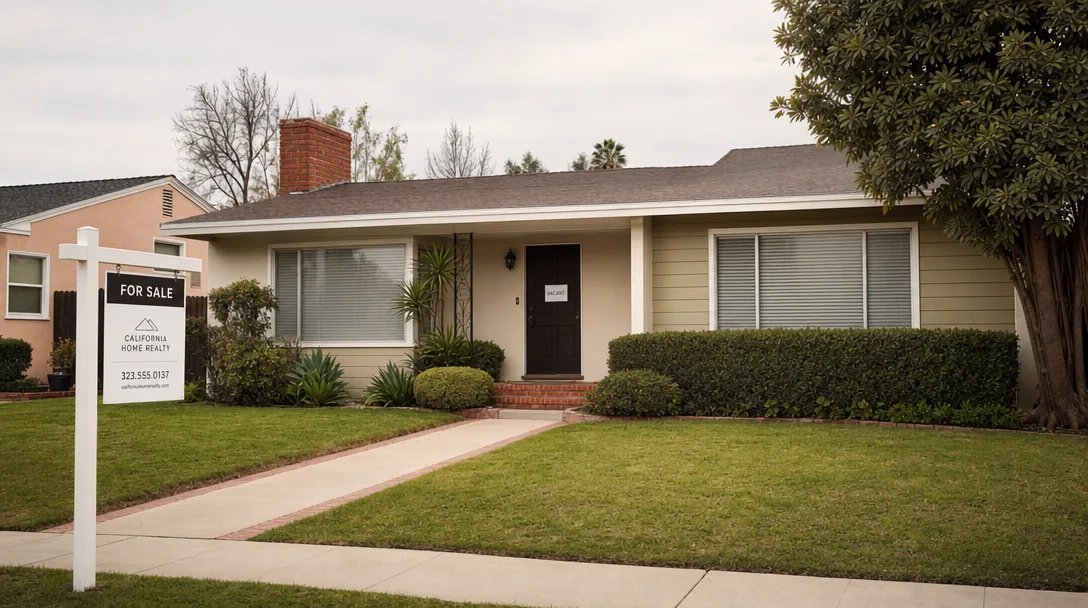
Here is the trap that catches more families than any other. Standard homeowners policies include vacancy clauses that suspend or cut coverage after a home has sat empty for roughly 30 to 60 days. Fire, theft, vandalism, and water damage can all fall outside the policy once the house is truly vacant, even if the premium is paid in full.
That matters enormously in probate because California estate administration typically runs 9 to 18 months, and LA County court backlogs can stretch it further. A family home left empty for that long on a standard policy is, in practical terms, underinsured. The fix is a dedicated vacant-home policy or a vacancy endorsement through a broker who understands probate. I walk through the full security and upkeep picture, including the insurance change, in The Executor's Guide to Managing Vacant Probate Property in Los Angeles.
Why 2026 Is Different: The California Insurance Market
After the catastrophic 2025 fire season, thousands of California homeowners in high fire hazard areas received nonrenewal notices, and some lost coverage entirely. If the decedent's policy was already on shaky ground, the estate inherits that problem right along with the house.
California law does give homeowners meaningful protections, and executors should know them:
Nonrenewal Notice
Under California Insurance Code §678, insurers must generally give at least 45 days' notice before a nonrenewal takes effect. If the notice is defective or missed, coverage continues. That window is your chance to respond, switch carriers, or find an alternative before the home goes bare.
The Surplus Lines Caveat
Those protections apply to admitted-market (standard) policies. Homes placed with surplus lines carriers, increasingly common in fire zones, do not get the same cancellation and nonrenewal safeguards. Read the declarations page carefully and ask whether the policy is admitted or surplus lines.
For the estate, the lesson is practical: the law buys you time, but only if you open the mail. Set up a file for every insurer letter, note the dates, and respond before deadlines, not after.
The FAIR Plan Is a Backstop, Not a Guarantee
When a home cannot get coverage from a standard carrier, California's FAIR Plan steps in as the insurer of last resort for fire. It is a serious part of the 2026 landscape. As of December 2025, the FAIR Plan covered more than 668,000 homes and carried roughly $4.8 billion in Palisades and Eaton fire exposure, which tells you how central it has become.
New for 2026: AB 2167 Raises the FAIR Plan Cap
Assembly Bill 2167, which took effect January 1, 2026, raised the FAIR Plan's dwelling coverage cap from $1.5 million to $3 million. For higher-value Los Angeles homes that were previously too expensive to insure through the plan, this is a meaningful change to understand when shopping estate coverage.
Here is the critical caveat for probate families: the FAIR Plan generally will not cover a home that is vacant roughly half the year or more. A vacant inherited property is often not an automatic fit, which means the estate may need to pair a FAIR Plan placement with a vacant-property policy, or find a broker who specializes in estate and vacant coverage. Do not assume a quote exists until a professional has confirmed it in writing.
Los Angeles County Specifics Every Executor Should Know
A few realities that are unique to LA County and worth naming out loud:
- Fire zones are everywhere. Large swaths of LA County sit in Very High Fire Hazard Severity Zones. For those homes, insurers weigh reconstruction cost, defensible space, roof condition, and replacement timelines, and nonrenewals remain an active risk in 2026.
- Carrying costs stack up. Insurance, property taxes, HOA dues, and utilities keep running while probate runs its course, often for a year or more. Insurance is the non-negotiable line item; an uninsured loss is a total loss for the estate.
- The Proposition 19 clock runs in parallel. If heirs want to keep the home with the parent-child property tax exclusion, the one-year move-in window continues regardless of what is happening with insurance. Protecting coverage and making smart tax decisions happen on the same calendar.
The Executor's Insurance Checklist
This is the short list I give families, whether they plan to sell through probate, transfer to heirs, or hold the property. Put it on the calendar in the first week:
- 1 Call the agent within days. Have the certified death certificate ready, confirm the policy is in force, and find out when the premium is due next.
- 2 Keep every premium paid. Use estate funds if needed, track the payments, and never let the policy lapse out of confusion.
- 3 Ask about vacancy on day one. Before the home has been empty 30 days, secure a vacant-home policy or endorsement so coverage survives the probate timeline.
- 4 Change the named insured to the estate. Once letters are issued, make sure the estate is the named insured, not the deceased individual.
- 5 Document everything. Walk the property with a dated video, record the condition of walls, roof, and systems, and keep receipts for any cleanup or repairs. This protects you and the estate if a claim arises.
- 6 Read every notice. A nonrenewal letter gives you time under California law, but only if you respond. Keep a file, log the dates, and treat deadlines as sacred.
- 7 Work with a probate-savvy broker. If coverage is denied hard in a fire zone, a broker who understands estates, the FAIR Plan, and AB 2167's higher cap can often find a path that a general agent can't.
"Everything is in Divine Order. But divine order still expects you to pay the premium, open the mail, and protect what your family built."— Toni Patillo
The Bottom Line
Insurance is not the emotional part of probate, but it is the practical part that protects everything else. A 15-minute phone call in the first week can save the estate hundreds of thousands of dollars, and knowing the 2026 rules around vacancy, nonrenewal, and the FAIR Plan turns a scary situation into a manageable checklist. Handle the coverage first, and you will have room to breathe while the rest of probate takes its course.
If you are an executor in Los Angeles County and you are not sure whether the family home is protected, that is exactly the kind of question I help families answer every day. You don't have to figure it out alone.
Key Sources
- • California Insurance Code §678 (offer of renewal / 45-day nonrenewal notice)
- • California Insurance Code §§676.6 and 677.2 (cancellation notice requirements)
- • California FAIR Plan program data (December 2025: 668,000+ homes, ~$4.8B Palisades/Eaton exposure)
- • California AB 2167, effective January 1, 2026 (FAIR Plan dwelling cap raised to $3M)
- • California Probate Code §§10400–10564 (IAEA authority for estate property management)

Written by Toni Patillo
Broker Associate · Certified Probate Specialist · 25+ Years Experience
Not sure whether the family home is protected?
Toni helps executors and families across Los Angeles and Southern California navigate insurance, carrying costs, and probate real estate decisions. Reach out for a free consultation.