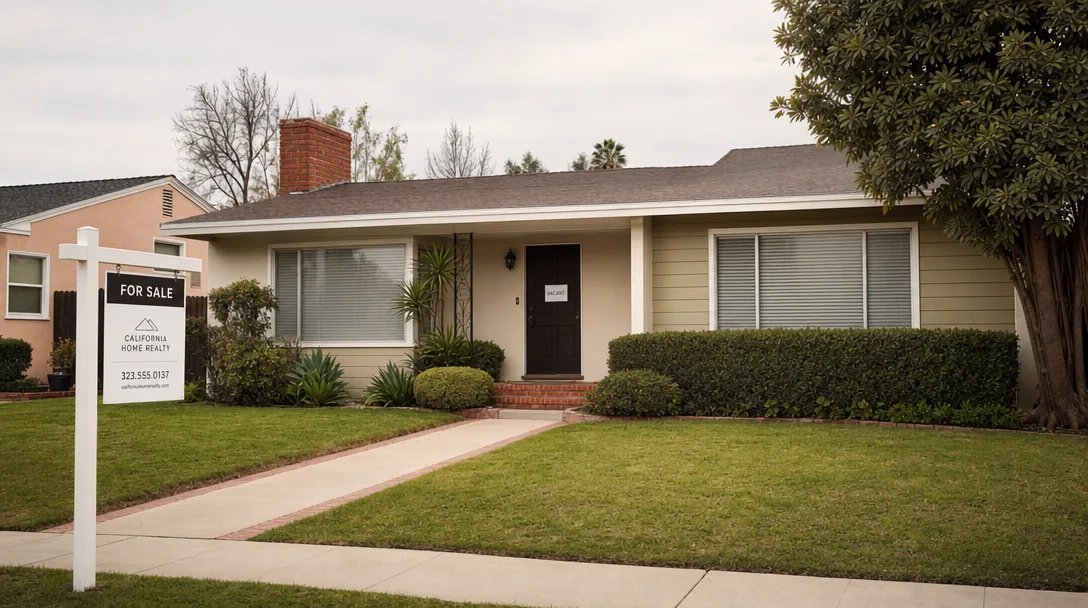
Here is the short answer: yes, deed fraud is a real and rising threat to inherited homes in Los Angeles, and a new California law, SB 255, takes effect January 1, 2027 to push back. The law requires every county recorder in the state to run a homeowner notification program that mails a copy of newly recorded deeds and trust documents to the parties who executed them within 30 days. Los Angeles County already operates one of the strongest versions of that program in the country, which is good news for LA families. The catch is that the protections only work if you enroll in them, keep your addresses current, and act while the estate is still open.
In 25 years of guiding families across Los Angeles and Southern California, I have watched the months after a loss become the most vulnerable season for the family home, and not only because of weather or deferred maintenance. Vacant, inherited houses are quietly becoming targets for people who record forged deeds, borrow against titles they do not own, and vanish before anyone notices. The courts call it title theft. The good news is that California just answered with its most direct statewide law yet, and LA families who know the playbook can protect a home before a single fraudulent paper is ever recorded.
"Everything is in Divine Order. When a family protects the records of the home, they protect the peace of the people inside it."Toni Patillo
Why This Question Feels Timely Right Now
This topic is not academic in 2026, and there are three reasons it belongs on every LA family's radar as the year closes. First, Governor Newsom signed SB 255 on October 6, 2025, and the law's core requirement lands on January 1, 2027: every county recorder must notify homeowners when someone records a deed or trust document against their property. Second, the Los Angeles County Board of Supervisors voted in April 2026 to raise the real estate recording fee from $5 to $10 per document specifically to fund anti-fraud enforcement, after the District Attorney's office warned that title fraud was one of the most common schemes it sees and that it is rising.
Third, the consequences went federal. In February 2026, federal prosecutors unsealed an indictment against 11 people in an alleged Los Angeles house-stealing ring that federal authorities said used forged and fraudulent documents to encumber and take over titles owned by seniors, with losses alleged to exceed $17 million. The alleged victims were often older homeowners with unencumbered properties. None of this means families should panic. It means the county has built real tools, and the families who use them are the ones who stay safe.
Why Inherited Homes Are Prime Targets
The Los Angeles County District Attorney's own guidance explains the pattern plainly: con artists scour public records for mortgage-free, high-equity properties, often owned by older residents, then fraudulently encumber or transfer the title and let lenders chase the result. An inherited home in probate has a signature the scanners like: a recent death record, an empty house, and often no active mortgage statement arriving in the mail to raise questions.
The data backs the instinct. The National Association of Realtors' 2025 deed and title fraud survey found that roughly 62% of reported title fraud cases involved vacant land, while only about 12% involved owner-occupied homes. Vacancy is the vulnerability. In Los Angeles County, the probate backlog routinely keeps estates open a year or more, which means a family's home can sit empty and unmonitored long enough for a forged quitclaim deed to be recorded and a fraudulent loan to be drawn against the title before anyone looks. The longer the home stays dark, the wider the window.
A Real-World Scenario: A Family in the San Fernando Valley and a Forged Quitclaim Deed
A father in the San Fernando Valley passed away, and his grown children were preparing the probate filings. The house stayed exactly as he left it: blinds closed, mail piling up, water and power still in his name. About six weeks later, the county's mailed notification program sent a copy of a quitclaim deed to the address on file for property taxes. None of the children had signed it. Someone had recorded a deed purporting to transfer the home out of the estate.
Because a deceased person cannot sign a deed, and the children did not yet hold title as heirs, the document was void from the start under California law. It still had to be cleared. The family reported it to the county's consumer affairs department, filed a police report, and worked with an attorney to quiet title so the estate could proceed cleanly. The recorded fraud cost them money, time, and sleep. A properly monitored title, an e-notification alert, and a locked and visited house would have shortened every step of that story.
What SB 255 Requires: The New Standard for 2027
SB 255, authored by Senator Seyarto and passed as Chapter 351 of the Statutes of 2025, adds section 27297.7 to the California Government Code, and it sets a statewide floor for title fraud protection. Here is what changes on January 1, 2027.
- Every county recorder must run a notification program. Each county must establish a recorder notification program by January 1, 2027, with the county's board of supervisors adopting an authorizing resolution. California no longer leaves this to a patchwork of local pilots.
- A mailed copy within 30 days. When a deed, quitclaim deed, mortgage, or deed of trust is recorded, the recorder must mail a copy of the recorded document within 30 days to the parties who executed it, sent to the address used for property tax bills that was on file before the recording. That tax-bill address is the linchpin of the whole system.
- Mail is the baseline; electronic notice is a bonus. Counties may also operate electronic notification programs, and many post notices to a homeowner portal. A forged document recorded in the middle of the night still triggers the mailed copy.
- Government transfers are exempt, and counties may charge a small fee. Documents where a state or local government is the grantee fall outside the notice requirement, and counties may charge a recording fee to cover the reasonable cost of running the program, which many counties have set in the $4 to $6 range.
- LA County keeps its own program on its own track. Because Los Angeles County already operated a mail notification program before the law, it is treated separately and authorized to continue its program through January 1, 2030. Our county is a step ahead, and the protections below are available to LA families today, not just in 2027.
One honest caveat: the law also says county recorders are not liable if a notice fails to reach someone. In practice that means the notification is a tripwire, not a guarantee. The family still owns the job of making sure the wire is tripped in their direction, which is exactly what the next section is about.
What Los Angeles County Already Does, and How to Use It
Los Angeles County runs a layered system that predates SB 255 by decades, and every layer is free for families. The first layer is the Registrar-Recorder/County Clerk's Homeowner Notification Program, in place since 1996. Whenever a Grant Deed, Quitclaim Deed, or Deed of Trust is recorded against a home, the county mails the owner a copy of the recorded document within 30 days. For a Notice of Default or Notice of Sale, the county moves faster, mailing within 5 days. The mailings go to the property address and to the mailing address the Assessor has on file, which is the address used for property tax bills.
The second layer is faster: the free Property Owner e-Notification service run by the LA County Assessor together with the Registrar-Recorder and the Department of Consumer and Business Affairs. Once you register your email and the property's Assessor Identification Number, found on your property tax bill, you get an email within 48 hours whenever a foreclosure, title transfer, or mortgage is recorded against that property. This is the early-warning system families should set up within days of a death, for every address in the estate.
The third layer is human: the Department of Consumer and Business Affairs runs the enhanced homeowner notification program, and its staff answer questions and investigate suspicious filings at (800) 593-8222, or by email at homehelp@dcba.lacounty.gov. Register the e-notification, keep the tax-bill address current, and keep that phone number in the estate folder. Most families only need it once, and they are grateful they have it when that day comes.
Who Can Actually Sign a Deed During Probate
A point that surprises many families: during probate, the deceased person cannot sign a deed, and heirs generally cannot validly convey a home they do not yet own. Title to the family house belongs to the estate, and only the personal representative, armed with court or Independent Administration of Estates Act authority, can transfer estate real property to a buyer or to the heirs. That legal gap is exactly what fraudsters try to exploit with forged quitclaim deeds that claim to come from the deceased, or from an heir who has no recorded authority.
The practical lesson cuts both ways. It means moving the estate forward is itself a fraud protection: the faster the representative is appointed and title is eventually distributed or sold through proper channels, the shorter the vulnerable window. It also means every transfer that does not run through the court-authorized path deserves a hard look. When someone who is not the appointed representative offers a deed "just to help things move," the answer comes straight from the Probate Code: no.
The Executor's Protection Checklist
- Update the Assessor's mailing address immediately. Every county notice, under both the current program and SB 255, rides on the property tax mailing address. Have the mail forwarded, and if the tax bill goes to a family member, change it to the executor or the estate attorney right away. This one step multiplies the value of every other.
- Enroll every estate property in e-Notification. Go to the LA County Assessor's Property Owner e-Notification page, enter the email and the Assessor Identification Number from the tax bill, and do it for each address in the estate. The 48-hour email alert is the fastest tripwire the county offers.
- Record the death certificate and, where they apply, the ownership affidavits. For jointly held property, an Affidavit of Death of Joint Tenant puts the ownership transition on the public record; for trust-held property, the counterpart is an Affidavit of Death of Trustee. A clear record makes a forged deed easier to spot and harder to pass off.
- Do not let the estate drift. Appoint the personal representative, open probate where it is needed, or complete a small-estate transfer, so real title actually lands in the heirs' names. An open estate is a long window; a concluded one closes it.
- Secure and monitor the house. Visit regularly, collect mail, keep utilities in a live name, keep property taxes and homeowners insurance current, and let the lender know what is happening. A home that looks occupied and maintained looks like trouble to a fraudster.
- Review the county's recorded documents quarterly. Use the Recorder's public index or an online title search to check each estate property for deeds, deeds of trust, or liens you did not authorize. Alerts help; your own eyes verify.
- Consider an owner's title insurance policy. For a high-value LA home, owner's title insurance can cover the cost of clearing a forged document from the title. It is a modest one-time premium compared to the legal fight it can prevent.
- Keep a ledger of every document the estate actually signs. When every deed, escrow instruction, and lien release the family did execute is in one file, a document that nobody recognizes jumps off the page.
What to Do If You Spot a Fraudulent Document
Under California law, a forged deed is void from the start, legally speaking it is as if the paper never existed, so a recorded forgery does not transfer the house out of the estate. The problem is practical: the false document sits in the public record where it can confuse lenders, title companies, and buyers until it is cleared. What families should do, in order.
- Do not destroy the document. Save the mailed copy and any envelope, and photograph it, because it is evidence of the fraud.
- Report it to the county. Call the LA County Department of Consumer and Business Affairs at (800) 593-8222 or email homehelp@dcba.lacounty.gov. They investigate suspicious recordings and coordinate with enforcement.
- File a police report. Property fraud is a crime, and a police report gives the rest of the process a paper trail.
- Contact the LA County District Attorney's Real Estate Fraud Section. The DA runs a dedicated unit for exactly this scheme, and its public materials describe the same warning signs estate families see.
- Have an attorney quiet the title. A quiet title action asks the court to declare the forged document void and clear the record. With the evidence above, this clean-up is usually straightforward, and it is the step that makes the estate sellable and financeable again.
Los Angeles County Specifics
- Three county agencies share the work. The Registrar-Recorder records and mails, the Assessor runs e-Notification, and the Department of Consumer and Business Affairs investigates. All three are in the estate family's corner, but none of them can act if the family stays silent.
- The Assessor Identification Number is the key. It is printed on the property tax bill, it identifies the property in every county system, and it is what you enter to register for e-Notification. Find the bill, and you can register in minutes.
- The probate backlog widens the window. Estates that take a year or more give fraudsters room to work. Moving the case toward appointment of the representative, and then toward transfer or sale, is not just legal progress, it is protective progress.
- Your recording fees fund the defense. The April 2026 fee increase was aimed directly at anti-fraud enforcement. Using the county's own alert tools is how a family gets value back from a fee they are already paying.
Key Sources
- • Senate Bill 255 (Seyarto), Chapter 351, Statutes of 2025, signed into law October 6, 2025, effective January 1, 2027, adding California Government Code section 27297.7: county recorder notification programs, the 30-day mailed notice to executing parties at the property tax mailing address, electronic notification authority, government-grantee exemption, recording fees, and the separate authorization for Los Angeles County's existing program through January 1, 2030.
- • Los Angeles County Registrar-Recorder/County Clerk, Homeowner Notification Program: mailed copies of recorded Grant Deeds, Quitclaim Deeds, and Deeds of Trust within 30 days and Notices of Default or Sale within 5 days, sent to the property address and the Assessor's mailing address.
- • LA County Assessor, Property Owner e-Notification (with Registrar-Recorder and DCBA): free opt-in email alerts within 48 hours of a recorded foreclosure, title transfer, or mortgage, registered by email and Assessor Identification Number.
- • LA County Department of Consumer and Business Affairs, Homeowner Notification Program and enhanced help line, (800) 593-8222, homehelp@dcba.lacounty.gov; LA County District Attorney's Office, Real Estate Fraud Section, including public warnings about title fraud schemes targeting seniors and high-equity homes.
- • National Association of Realtors 2025 Deed and Title Fraud Survey: approximately 62% of reported cases involved vacant land versus about 12% for owner-occupied homes. Federal enforcement action, February 2026, alleging an 11-person Los Angeles title theft ring with losses exceeding $17 million; LA County Board of Supervisors, April 2026, raising the real estate recording fee from $5 to $10 per document to fund anti-fraud enforcement.
This article is general education, not legal advice. If you suspect a forged document has been recorded against a family property, contact the Los Angeles County Department of Consumer and Business Affairs, file a police report, and consult a licensed California attorney about clearing the title. Program details reflect public sources as of October 2026.
Managing an inherited home in Los Angeles, or wondering whether the estate's title is protected? Let us talk.
Toni Patillo specializes in probate, trust, and estate real estate throughout Los Angeles and Southern California. With 25+ years of experience and 1100+ homes sold, she helps executors and families protect and manage complex property situations with clarity and care. You can also explore more of Toni's work and philosophy at her personal brand site, calltoninow.com.

Written by Toni Patillo
Broker Associate · Certified Probate Specialist · 25+ Years Experience