If you are serving as executor of an estate in Los Angeles County, you will receive a letter from the court assigning someone you have never met to appraise the estate's assets. That person is the probate referee, and their job is one of the most misunderstood steps in the entire probate process.
Over my 25 years guiding families through probate in Southern California, I have seen the probate referee process trip up even the most organized executors. Some worry the appraisal will be too high and derail the sale. Others assume they can skip it altogether. Most simply have no idea what to expect.
This guide covers everything you need to know about the probate referee system in California: who the referee is, how assets get valued, what the appraisal means for a future sale, and how to avoid the common mistakes I see families make in Los Angeles County.
What Is a Probate Referee?
A probate referee is an independent, court-appointed appraiser responsible for placing a fair market value on all non-cash assets in a decedent's estate. Under California Probate Code Section 400, the State Controller appoints referees for each county. They serve five-year terms and must pass a rigorous state-administered exam covering probate procedures and appraisal principles. Most are attorneys, CPAs, or experienced professional appraisers.
As of 2026, there are 123 appointed probate referees across California. In Los Angeles County, where over 12,000 estate and trust probate filings were recorded in fiscal year 2024-2025 — more than Orange, Riverside, San Bernardino, and San Diego counties combined — the referee system handles an enormous volume. Your referee is assigned on a rotating basis based on case number ranges published by the State Controller. You do not get to choose who you get.
Key Point
The probate referee is not your adversary. They are a neutral, court-appointed professional whose job is to produce an objective appraisal. In my experience, helping your referee do their job well — by providing complete information and prompt access to the property — makes the entire process smoother for everyone.
What Gets Appraised and What Does Not?
Understanding the distinction between what the referee appraises and what you handle as executor is critical for staying organized and avoiding delays.
Assets the Probate Referee Appraises
- Real property — houses, condos, land, commercial buildings, rental properties
- Vehicles — cars, boats, RVs, motorcycles
- Business interests — ownership stakes in companies, partnerships, LLCs
- Stocks, bonds, and securities — publicly traded and private holdings
- Collectibles and personal property of value — artwork, jewelry, antiques, coin collections, firearms, fine wine
Assets the Executor Values (No Referee Needed)
- Cash and bank accounts — checking, savings, money market accounts (valued at face value as of date of death)
- Certificates of deposit — valued at face value plus accrued interest as of date of death
- Retirement accounts and life insurance — though these often pass outside probate to named beneficiaries
How the Probate Referee Process Works in LA County
Here is the step-by-step process from the moment you receive your Letters Testamentary or Letters of Administration:
Referee Appointment
The court appoints a probate referee, typically at the same time your Letters are issued or shortly after. In Los Angeles County, you may need to file Local Form LASC PRO 010 (Application and Order Appointing Probate Referee) to formally request the appointment. The referee is assigned based on your case number range.
Inventory Preparation
You compile a complete list of all non-cash estate assets for the referee. This includes property addresses, vehicle VINs, account statements, stock certificates, and descriptions of any collectibles or personal property of value. Missing items at this stage means a supplemental filing later, which costs time and money.
Property Inspection and Valuation
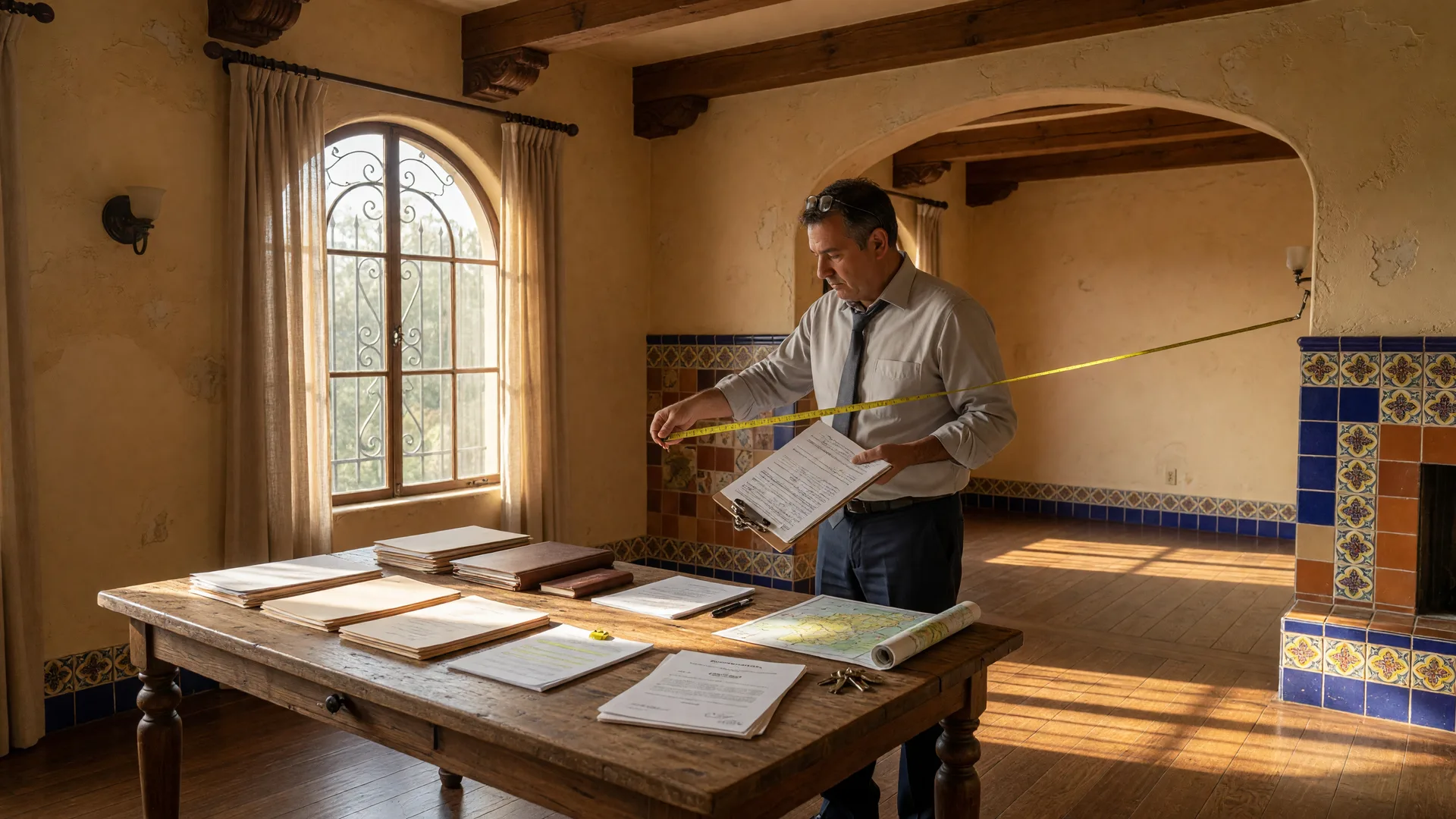
The referee inspects the property and research comparable sales. For real estate in Los Angeles, this typically means visiting the property, photographing it, and analyzing recent comparable sales in the neighborhood. The valuation date is the date of death, not the current date. This is an important distinction — in a rising market, the referee's value may be lower than what the property ultimately sells for months later.
Completion of Form DE-160
The referee returns a completed Judicial Council Form DE-160 (Inventory and Appraisal) along with Form DE-161 (Attachment) listing each asset and its appraised value. You then file this with the court.
Court Filing Within 4 Months
The completed Inventory and Appraisal must be filed with the court within four months from the date your Letters were issued. This is a statutory deadline under California Probate Code Section 12200, and missing it can trigger court orders to show cause, fines, or even removal as executor.
Probate Referee Fees: What They Cost
One of the most common questions I hear is, "How much does this cost?" The answer is reassuring: probate referee fees in California are set by statute, not by the hour, which keeps them predictable.
- Fee rate: 0.1% (one-tenth of one percent) of the total appraised value of all non-cash assets
- Minimum fee: $75
- Maximum cap: $10,000 per estate (unless the court authorizes more in unusual circumstances)
- Additional expenses: Reasonable costs like mileage, mapping, and photography are reimbursed separately
- Payment: All fees are paid from the estate, not out of your personal pocket
* Example: An estate with a $2 million home and $500,000 in other non-cash assets would pay a referee fee of $2,500 (0.1% of $2.5 million).
The 90% Rule: What the Appraisal Means for Selling
This is where the probate referee's appraisal has a direct, practical impact on selling a probate property in Los Angeles. Under California's Independent Administration of Estates Act (IAEA), when a sale requires court confirmation, the accepted offer must be at least 90% of the probate referee's appraised value.
Here is what that means in real terms:
- If the appraisal is too high: An inflated appraisal creates a floor that buyers cannot reach. You might receive offers, but none at 90% or more of the appraised value. The court cannot confirm a sale below that threshold (without full IAEA authority). This stalls the process and may force you to seek a revised appraisal or wait for the market to catch up.
- If the appraisal is too low: The property may sell for less than its true market value, potentially shortchanging the estate's beneficiaries. As executor, you have a fiduciary duty to maximize the estate's value. An undervalued appraisal creates tension with that obligation.
Important note: If the personal representative has been granted full IAEA authority (which is common in many probate cases), the 90% rule does not apply, and the property can be sold at any price the executor agrees to in good faith. But partial IAEA authority is also common — so you need to know exactly which authority you have.
This is one of the reasons I recommend executors work with a real estate agent who understands the probate referee process. A knowledgeable agent can help you prepare the property for the referee's inspection, provide comparable sales data that supports an accurate valuation, and guide the pricing strategy with the appraisal number in mind.
Can the Appraisal Be Challenged?
Yes, and this is something every executor should know in case the numbers do not align with market reality. You have several options if you believe the appraisal is off:
Contact the Referee Directly
Probate referees are professionals who want to get it right. If you have updated comparable sales, new information about the property's condition, or evidence of a market shift since the date of death, share it. Many issues are resolved this way without court involvement.
Obtain an Independent Appraisal
Hire a certified appraiser to prepare a competing valuation, typically costing $500 to $2,000 depending on the property. This gives you evidence to present to the referee or the court.
File a Formal Objection With the Court
Under California Probate Code, the personal representative or any interested person may file a written objection to the appraisal at any time before the hearing on the petition for final distribution. The court will hold a hearing to determine the property's fair market value.
"What You Speak You Create — so speak clearly about what the property is worth. An accurate appraisal aligned with market reality sets the stage for a smooth sale that benefits everyone."— Toni Patillo
5 Common Mistakes Executors Make With the Probate Referee
After 25 years in this business, these are the pitfalls I see most often. Avoid them and your probate experience will be immeasurably smoother.
Missing the 4-Month Filing Deadline
This is the single most common and costly mistake. California Probate Code Section 12200 gives you four months from the date Letters are issued to file the Inventory and Appraisal. In Los Angeles County, where court calendars are already stretched, missing this deadline triggers orders to show cause and can add months of delay.
Incomplete Asset Inventory
Missing assets means filing a corrected or supplemental inventory later. Forgotten bank accounts, old stock certificates, digital assets, and sentimental items with real value (like antique furniture or jewelry) are common omissions. Be thorough on the first pass.
Delaying Contact With the Referee
The referee cannot do their job until you provide them with a complete list of assets and supporting documentation. Respond promptly to their requests. A referee who cannot get basic information from you will eventually flag the delay to the court.
Confusing Probate vs. Non-Probate Assets
Assets held in joint tenancy, living trusts, or passing directly to named beneficiaries (like life insurance or retirement accounts) are not part of the probate estate. Mixing them up on the inventory creates filing errors and confusion.
Ignoring LA County Local Rules
Los Angeles County has its own local forms and procedures beyond the statewide requirements. The LASC PRO 010 form for referee appointment is one example. Not knowing the local rules can cause your filing to be rejected or delayed.
The Bigger Picture: Why Getting the Appraisal Right Matters
The probate referee's appraisal is not just a piece of paper you file and forget. It affects the sale price, the timeline, the court's confidence in your administration, and ultimately what beneficiaries receive. Getting it right — or knowing what to do when it is not quite right — is one of the most important things you can do as executor.
The referee process is designed to be neutral and transparent. When it works well, it protects the estate, its beneficiaries, and you as executor. Understanding how it works before it happens is the best way to ensure it goes smoothly.
And if you are wondering whether you need an experienced probate real estate specialist on your team through this process — the answer is yes. Someone who knows how the appraisal interacts with the sale, who can help prepare the property for the referee's inspection, and who can guide the listing strategy with the 90% rule in mind.
Thinking about selling a probate property in Los Angeles?
Toni Patillo has spent 25 years guiding families through probate real estate transactions across Southern California. She understands the probate referee process, the court confirmation timeline, and how to price a property so it sells smoothly and maximizes value for the estate.

Written by Toni Patillo
Broker Associate · Certified Probate Specialist · 25+ Years Experience · 1100+ Homes Sold